Choosing the wrong power cord can make your rice cooker shipment unsellable1. This mistake leads to compliance failures, customs rejection, and massive financial loss. Understanding customization is key to avoiding disaster.
Customizing rice cooker power cords involves matching the plug type, cable specifications, and certifications to your target market's regulations and the appliance's power rating. It is a critical step to ensure safety, compliance, and market access, not just an aesthetic choice.
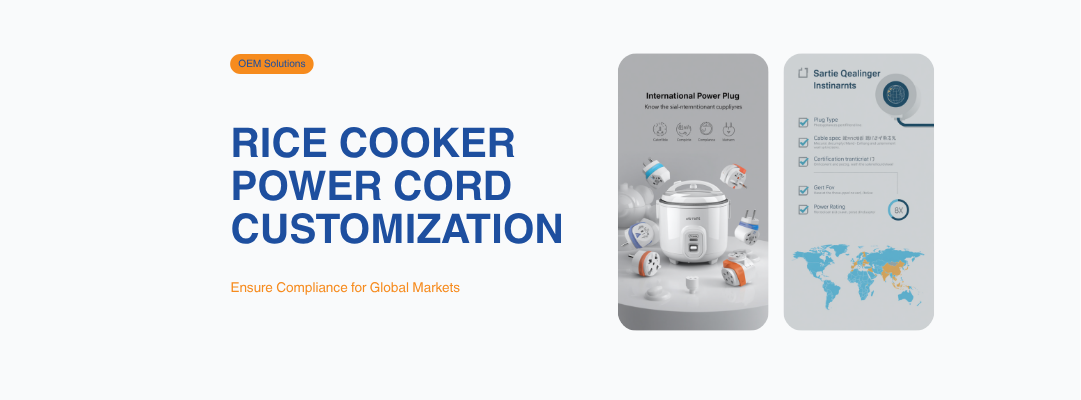
I've talked with hundreds of procurement managers over the years. Many start the conversation by showing me a picture of a plug and asking, "Can you make this one?" While we can make almost any plug, that is the wrong question to start with. The real risk isn't about the shape of the plug. It's about whether the entire product—the rice cooker with its attached cord—can be legally sold and safely used in your market. A simple mistake here can turn a container of profitable goods into a warehouse of useless metal and plastic. This guide will walk you through how we approach this as a risk-control decision to protect your investment.
Why Is the Target Market More Important Than the Plug's Appearance?
You found a supplier who can make the plug you want. But if it lacks the right certification for your country, your products could be blocked at customs or deemed unsafe. Always start with your target market's regulations.
Each country has unique electrical standards, plug types, and mandatory certifications2 like CE, UKCA, or KC. Choosing a plug based on looks alone risks non-compliance, making your rice cookers illegal to sell and creating a significant business risk.
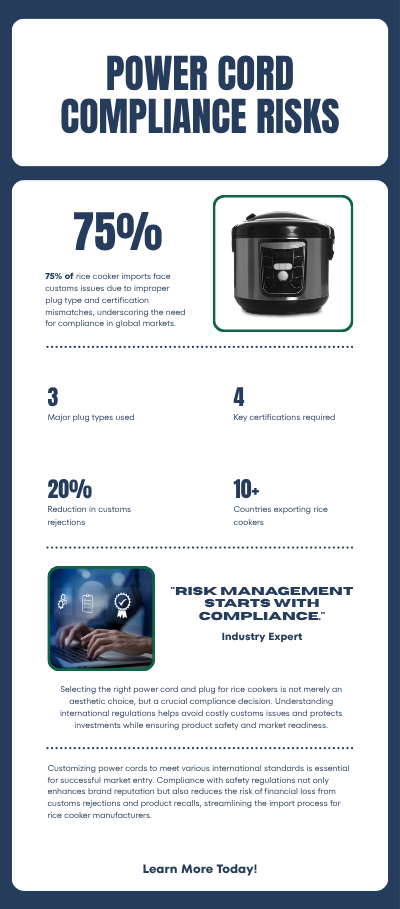
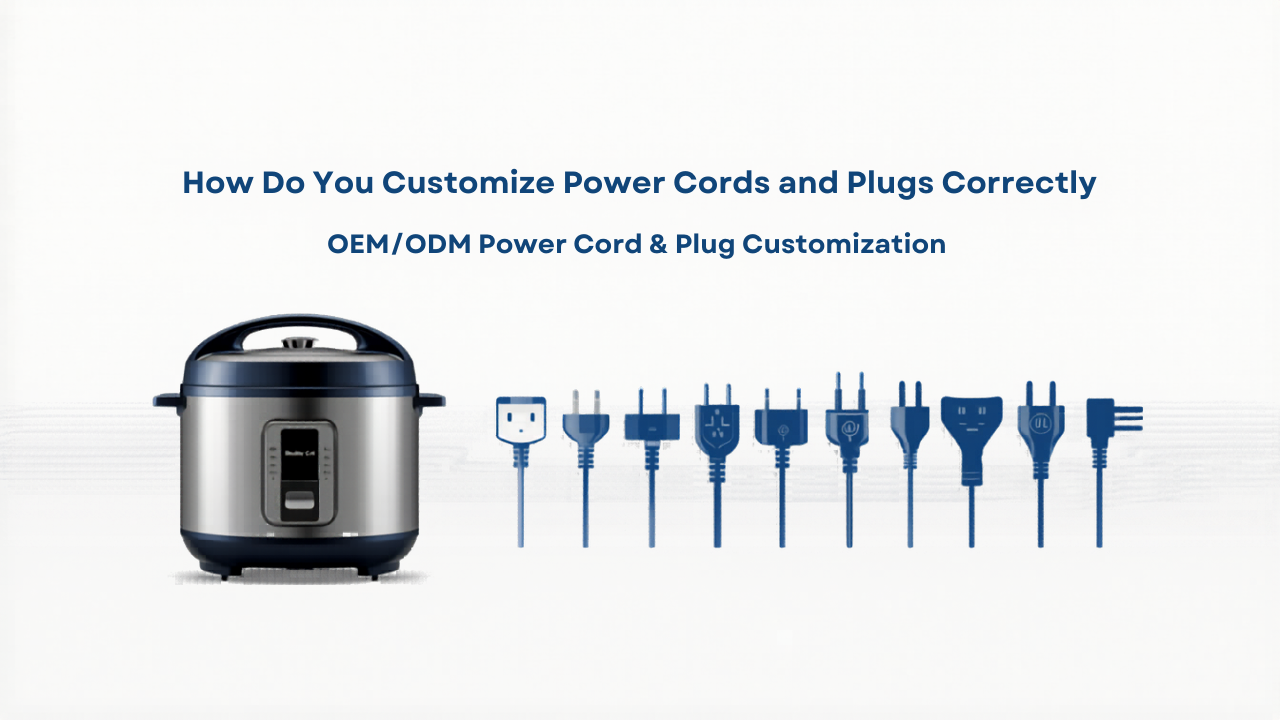
In every OEM/ODM project, my first question is never "Which plug do you need?" It's always "Where will you sell these rice cookers?" The answer to this question dictates everything that follows. For example, a client sourcing for the UK needs a Type G plug that complies with the BS 1363 standard and carries a UKCA mark3. The same rice cooker model destined for Germany would need a Type F plug and CE marking. Sending a CE-marked product to the UK market post-Brexit might cause issues4, and vice-versa. The plug isn't just a piece of plastic and metal; it's a statement of compliance. As a procurement manager, your biggest risk is unsellable inventory. Ensuring the power cord and plug match the target market's rules from day one is your first and most important line of defense.
Understanding Market-Specific Requirements
Here’s a simplified table to show what I mean. This isn't a complete list, but it illustrates how different key markets have their own set of rules.
| Region/Country | Common Plug Type(s) | Key Certification Example | Common Voltage/Frequency |
|---|---|---|---|
| European Union | Type F (Schuko) / C | CE, GS | 220-240V / 50Hz |
| United Kingdom | Type G (BS 1363) | UKCA | 230V / 50Hz |
| South Korea | Type F | KC Mark | 220V / 60Hz |
| Thailand | Type O / A / B / C | TISI | 220V / 50Hz |
Getting this right prevents your shipment from being stopped at the border.
How Do Power Cords and Rice Cookers Affect Each Other's Safety?
You might see the power cord as a separate part. But an underrated cord on a high-power rice cooker is a fire hazard5, leading to product recalls and brand damage. You must treat the cord and cooker as a single system.
The power cord's specifications, like its wire gauge and material, must safely handle the rice cooker's wattage6. A mismatch can cause overheating, short circuits, or fire. The entire unit—cooker plus cord—is tested for safety, so they must be compatible from the start.
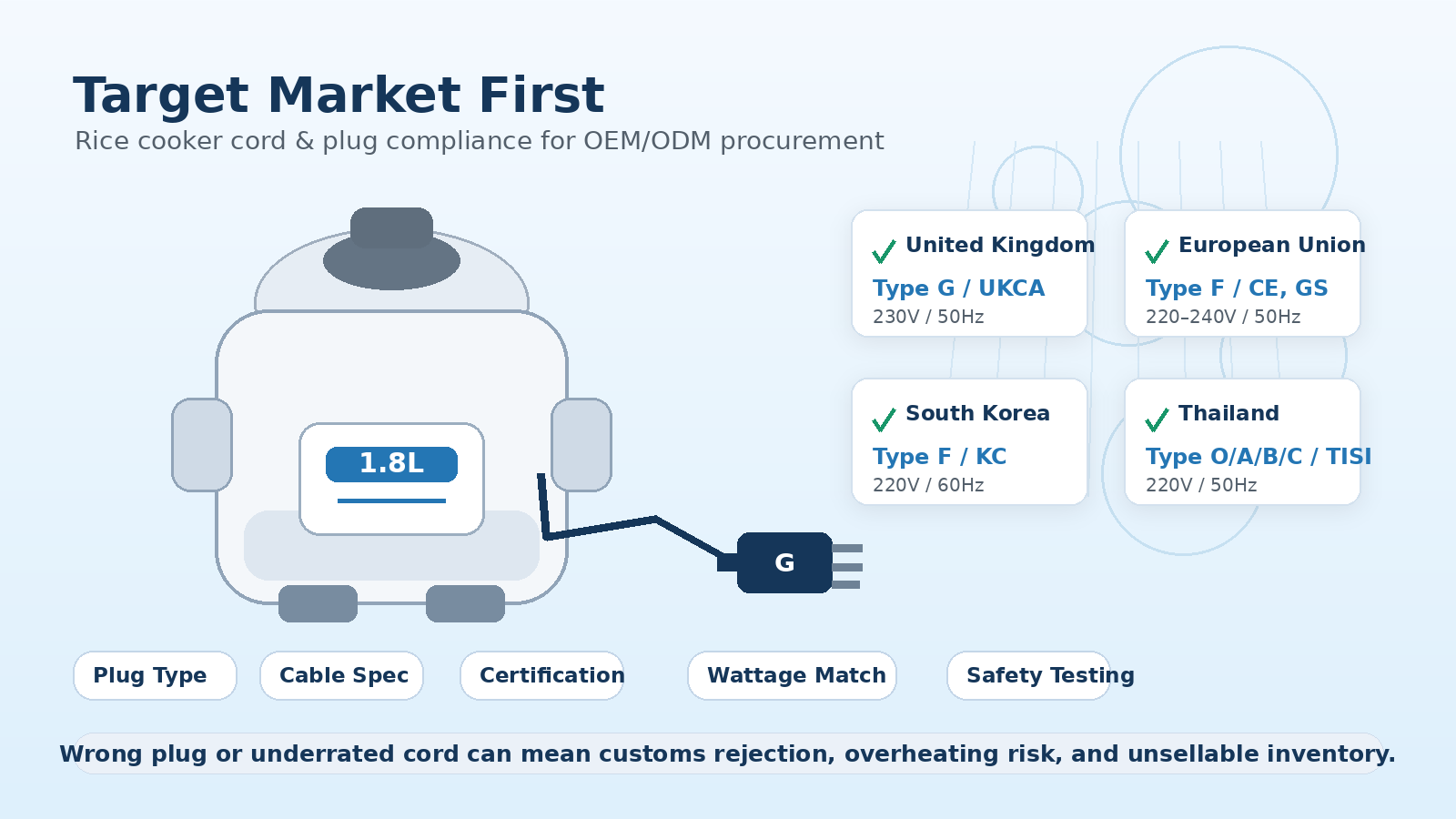
Think of a power cord like the tires on a car. You wouldn't put thin bicycle tires on a heavy truck because they can't handle the load. The same logic applies to rice cookers. A small, 400W mini rice cooker has very different power cord requirements than a 1950W commercial rice cooker that serves dozens of people. If you use a cord with wires that are too thin for a high-power appliance, it will overheat. This can melt the plastic insulation, cause a short circuit, and potentially start a fire. This is why the power cord is not an accessory you choose later; it is an integral part of the product's design and safety testing. At our factory, we don't just inspect the incoming power cords. We test the final, assembled product. Every single rice cooker undergoes high-voltage testing, watt testing, and groundwire testing7 to ensure the entire system is safe before it leaves our production line.
Key Cord Specifications to Match
When confirming the cord, you need to look beyond the plug.
- Wire Gauge: This is the thickness of the copper wires inside the cable, often measured in square millimeters (e.g., 0.75mm², 1.0mm²). Higher-wattage rice cookers require thicker wires8 to carry more current without getting hot.
- Number of Cores: Most markets require a 3-core cable (live, neutral, and ground) for safety%%%FOOTNOTE_REF9%%%, especially for appliances with metal bodies. [The ground wire is a critical safety feature that protects users from electric shock](https://en.wikipedia.org/wiki/Ground(electricity))10.
- Rated Voltage and Current: The cord must be rated for the voltage of the target market (e.g., 230V) and a current (e.g., 10A or 13A) that is higher than what the rice cooker will draw11.
Confirming these details ensures the cord can safely power the appliance for its entire lifespan.
What's the Pre-Order Checklist for Power Cord Customization?
Miscommunication with suppliers about specs is a major headache. Vague instructions lead to incorrect samples, production delays, and last-minute changes that cost you time and money. Use a detailed checklist to confirm every detail before you order.
A solid pre-order checklist includes12: target market, exact plug type, rated voltage/current, cable specifications (gauge, length, color), required certifications with documentation, and any specific packaging or labeling needs. This prevents costly misunderstandings.
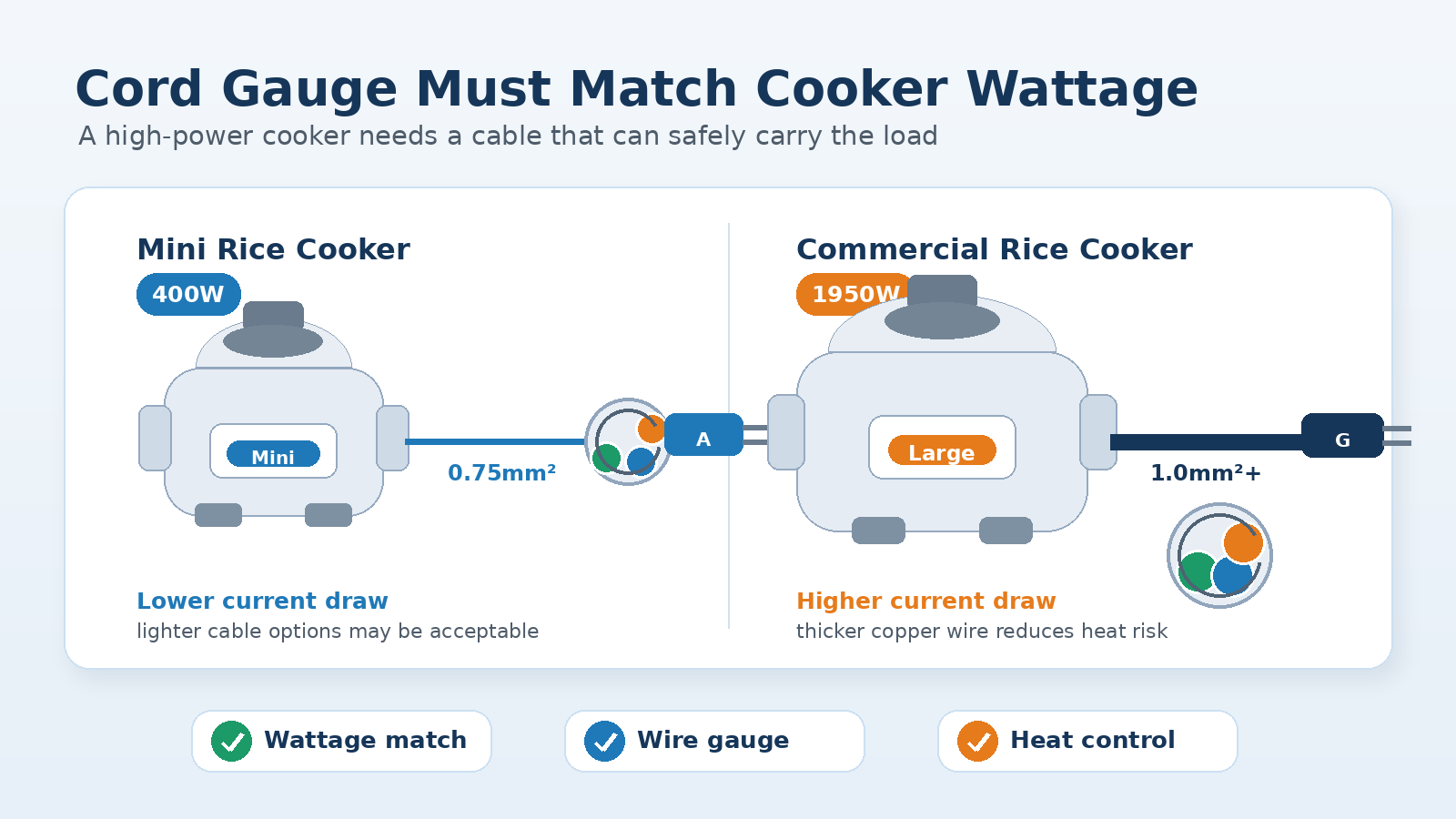
From my experience, assumptions are the biggest cause of delays and errors in OEM/ODM manufacturing. I once had a project delayed by three weeks because the client assumed a "standard" 1.0-meter cord, but their end-customer required a 1.5-meter cord for their retail stores. We had to re-order all the power cords. To prevent these problems, I use a simple but effective checklist with every client before we start production. This document becomes part of our mutual agreement and ensures we are both perfectly aligned on the requirements. It removes ambiguity and gives you, the procurement manager, a clear record of what was specified. This simple tool helps you manage your supplier and protect your project from preventable errors. It turns a conversation into a clear set of manufacturing instructions.
Your Power Cord Confirmation Checklist
Use this as a guide when communicating with your supplier.
- Target Market: Which country or region will the product be sold in? (e.g., "United Kingdom")
- Plug Type: Be specific. Use the standard name if you know it. (e.g., "Type G, compliant with BS 1363")
- Rated Voltage & Current: Match the market and appliance. (e.g., "Rated for 230V, with a 13A fuse")
- Cable Specifications:
- Cores: 2-core or 3-core? (e.g., "3-core for grounding")
- Wire Gauge/Area: Based on the rice cooker's power. (e.g., "3 x 0.75mm² copper wire")
- Cable Length & Color: (e.g., "1.2 meters, white PVC")
- Certification: What marks and documents are needed? (e.g., "Must have UKCA mark on the plug. Please provide the certificate copy.")
- Packaging & Labeling: Any special requirements? (e.g., "Cord must be bundled with a branded paper tie.")
Conclusion
Correct power cord customization is not about choice, but about risk management. It ensures your rice cookers are safe, compliant, and ready for sale in your target market.
"CBP officers seize more than $150000 worth of fake electronics", https://www.cbp.gov/newsroom/local-media-release/cbp-officers-seize-more-150000-worth-fake-electronics. A source from a national customs agency or market surveillance authority can confirm that goods failing to meet local safety and compliance regulations, including those for power cords, may be denied entry, seized, or subject to a forced recall, resulting in financial loss. Evidence role: general_support; source type: government. Supports: The claim that non-compliant goods can be rejected, seized, or forced into a recall.. ↩
"Certification mark", https://en.wikipedia.org/wiki/Certification_mark. A resource from an international standards body like the International Electrotechnical Commission (IEC) or a comprehensive encyclopedia can provide a guide to the different mains plug types, voltages, and frequencies used around the world, illustrating the need for market-specific customization. Evidence role: general_support; source type: encyclopedia. Supports: The claim that plug types, electrical standards, and certifications vary significantly by country.. ↩
"AC power plugs and sockets: British and related types - Wikipedia", https://en.wikipedia.org/wiki/AC_power_plugs_and_sockets:_British_and_related_types. Official guidance from the UK government's Office for Product Safety and Standards confirms that plugs sold in the UK must comply with the BS 1363 standard and be marked with the UKCA (UK Conformity Assessed) mark to be legally placed on the market in Great Britain. Evidence role: general_support; source type: government. Supports: The claim that UK law requires specific standards (BS 1363) and markings (UKCA) for electrical plugs.. ↩
"UKCA marking - Wikipedia", https://en.wikipedia.org/wiki/UKCA_marking. Information from the UK government explains the transition from the EU's CE marking to the UKCA marking for goods placed on the market in Great Britain, outlining the timelines and conditions under which CE-marked products may no longer be accepted, creating compliance risks. Evidence role: historical_context; source type: government. Supports: The claim that post-Brexit regulations have changed marking requirements for goods sold in the UK.. ↩
"CPSC Launches Program to Prevent Home Electrical Wiring System ...", https://www.cpsc.gov/Newsroom/News-Releases/1996/CPSC-Launches-Program-to-Prevent-Home-Electrical-Wiring-System-Fires. Reports from consumer product safety commissions or fire prevention agencies demonstrate that using a power cord with a wire gauge too small for the appliance's current draw can cause the cord to overheat, melt its insulation, and potentially ignite nearby materials, posing a significant fire hazard. Evidence role: mechanism; source type: government. Supports: The claim that an underrated cord can overheat and cause a fire.. ↩
"Wire Gauge Chart and Ampacity | Guide for Electricians", https://www.uti.edu/blog/electrical/wire-gauge-chart-awg-ampacity. An electrical engineering resource can explain that an appliance's power consumption (wattage) at a given voltage determines its current draw (amperage). The power cord's wire gauge must have sufficient ampacity (current-carrying capacity) to handle this load without dangerous overheating. Evidence role: mechanism; source type: education. Supports: The claim that wire gauge must be matched to the power (wattage) of an appliance.. ↩
"Testing Grounding Systems - 30 CFR 56.12028 and 57.12028", https://arlweb.msha.gov/stats/top20viols/tips/12028.htm. Documentation from a safety certification body or an electrical testing laboratory can define these end-of-line manufacturing tests: high-voltage (hipot) testing verifies insulation integrity, watt testing confirms correct power consumption, and groundwire testing ensures a proper safety ground connection. Evidence role: definition; source type: research. Supports: The claim that high-voltage, watt, and groundwire tests are standard safety procedures.. ↩
"Joule heating - Wikipedia", https://en.wikipedia.org/wiki/Joule_heating. A physics or engineering textbook can explain that a wire's electrical resistance is inversely proportional to its cross-sectional area. A thicker wire has lower resistance, which reduces the amount of heat generated (Joule heating) when carrying the higher current demanded by a high-wattage appliance. Evidence role: mechanism; source type: education. Supports: The claim that higher wattage requires thicker wires.. ↩
"Appliance classes - Wikipedia", https://en.wikipedia.org/wiki/Appliance_classes. Standards from the International Electrotechnical Commission (IEC) define appliance safety classes. Class I appliances, which often have metal casings, require a protective earth connection (grounding) via a 3-core cable to protect against electric shock in case of an insulation failure. Evidence role: definition; source type: institution. Supports: The claim that 3-core (grounded) cables are a common safety requirement.. ↩
"Ground (electricity) - Wikipedia", https://en.wikipedia.org/wiki/Ground_(electricity). An electrical safety guide or encyclopedia can explain that in the event of an internal fault that connects a live wire to a metal casing, the ground wire provides a low-resistance path for current to flow to the earth. This large current flow trips a circuit breaker or blows a fuse, de-energizing the appliance and protecting the user from electric shock. Evidence role: mechanism; source type: encyclopedia. Supports: The claim that a ground wire protects users from electric shock.. ↩
"Extension Cords and Power Strips - Safety", https://nps.edu/web/safety/extensioncords. National electrical codes and engineering standards mandate that conductors must be rated to handle more than the expected continuous load of an appliance. This safety margin accounts for heat buildup and prevents the cord from operating at its absolute thermal limit, ensuring long-term safety and reliability. Evidence role: general_support; source type: government. Supports: The claim that a cord's current rating should exceed the appliance's draw.. ↩
"[DOC] Checklist of Internal Controls - University of Alaska System", https://www.alaska.edu/procurement/files/CHECKLISTS-FOR-INTERNAL-CONTROLS.docx. A source in supply chain management or industrial procurement can confirm that the use of detailed technical specification sheets or pre-production checklists is a standard industry practice to ensure alignment between the client and manufacturer, reducing the risk of errors, delays, and cost overruns. Evidence role: general_support; source type: other. Supports: The claim that a detailed checklist is a crucial tool in procurement and manufacturing.. ↩