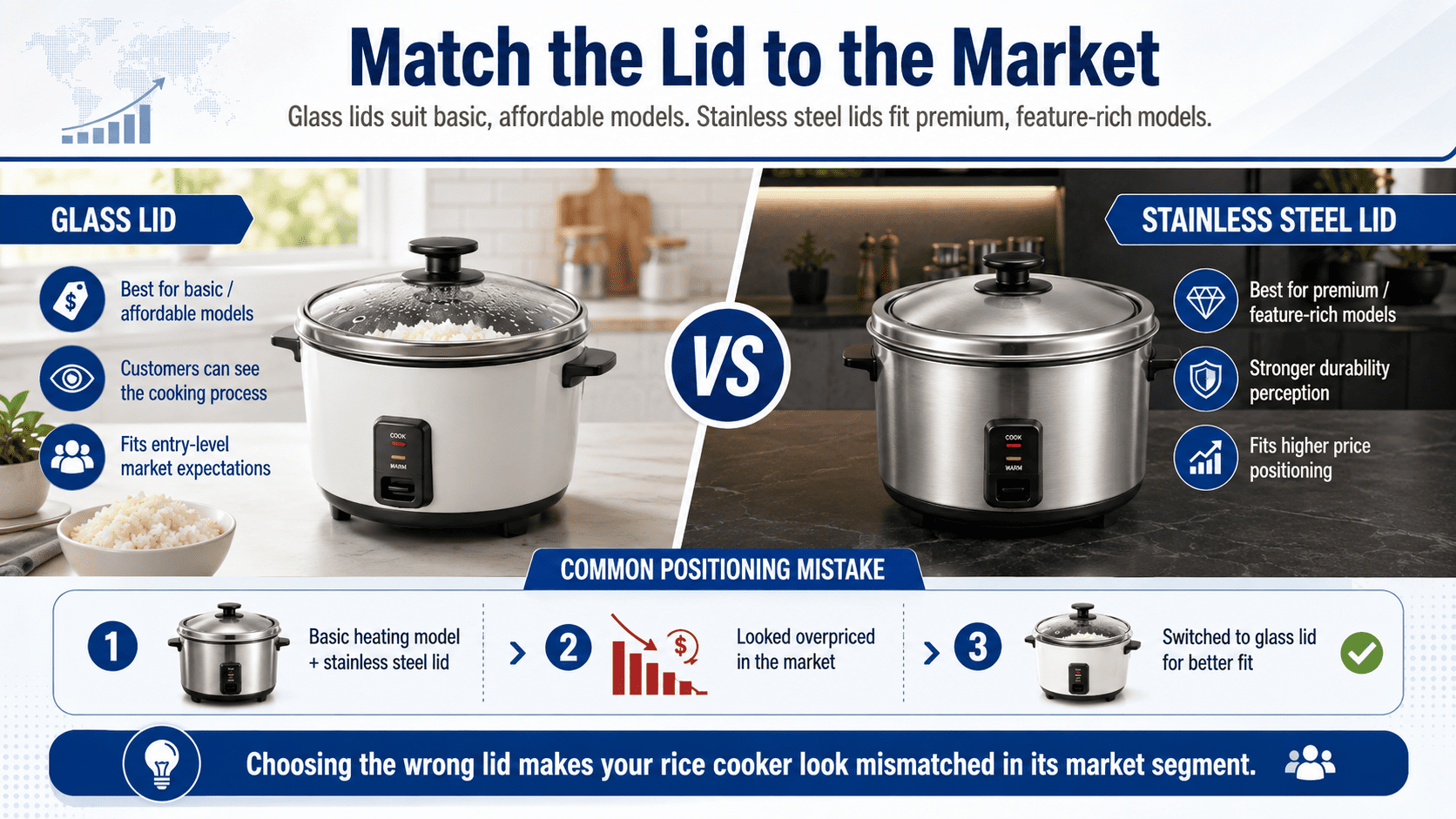
I remember talking to a procurement manager last year. He wanted stainless steel lids for all his rice cookers. He believed stainless steel meant premium quality. His customers would pay more. But his rice cookers were basic heating models with simple functions. The stainless steel lids made them look overpriced. Sales were slow. He came back three months later asking for glass lids instead.
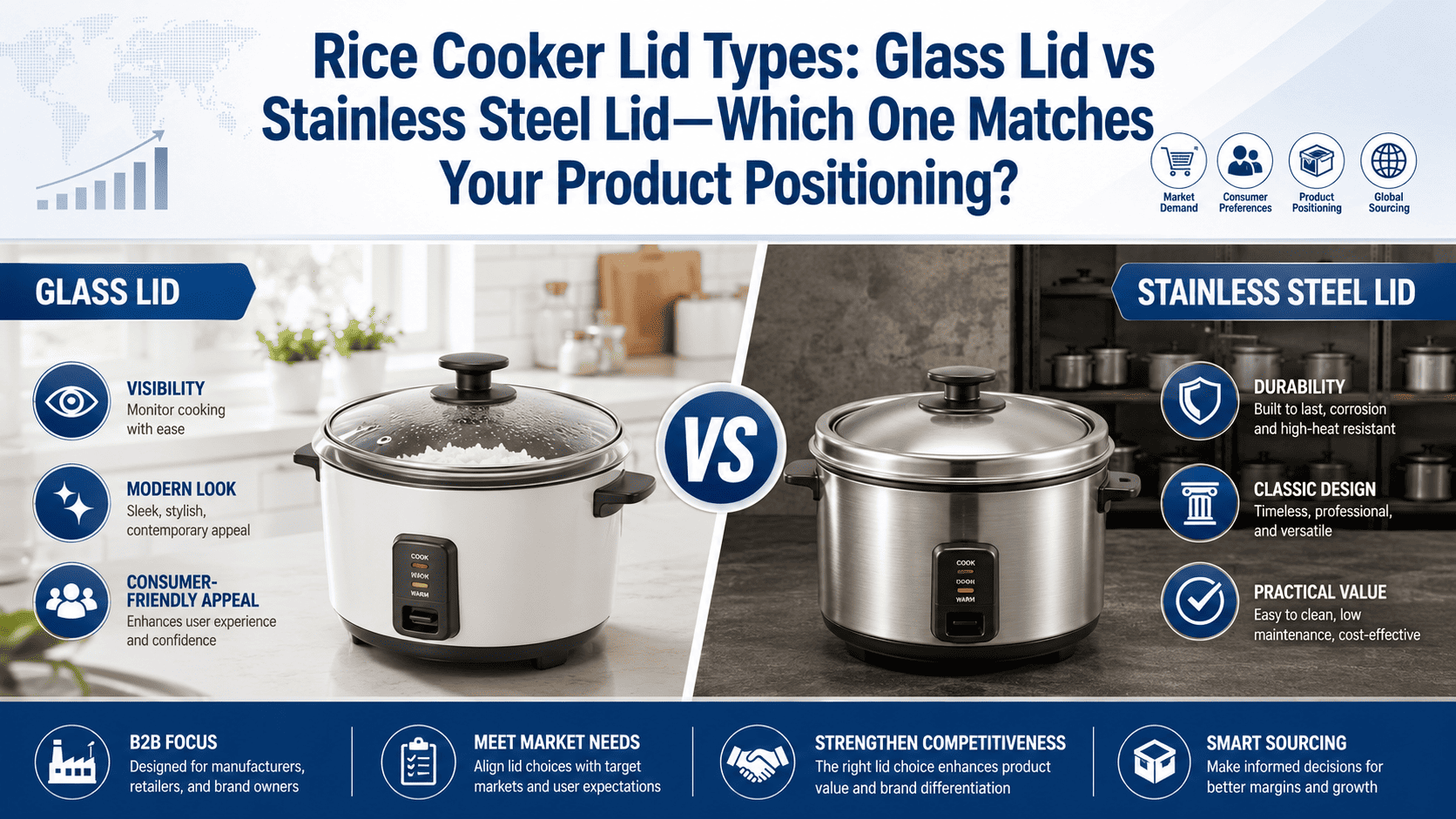
The lid type you choose is not about which material is better. It's about whether the lid matches your product's price tier and target market expectations. Glass lids work for basic, affordable models where customers want to see the cooking process. Stainless steel lids fit feature-rich, higher-priced models where visibility matters less than perceived durability. Choosing the wrong lid makes your rice cooker look mismatched in its market segment.
Many buyers think lid selection is about material quality. But I've seen this decision determine whether a product succeeds or fails in its target market. Let me walk you through what really matters when you choose between glass and stainless steel lids.
Why Do Buyers Assume Stainless Steel Lids Are Always Premium?
Buyers often tell me stainless steel looks more expensive. They think it signals higher quality to their customers. They believe it justifies a higher retail price.
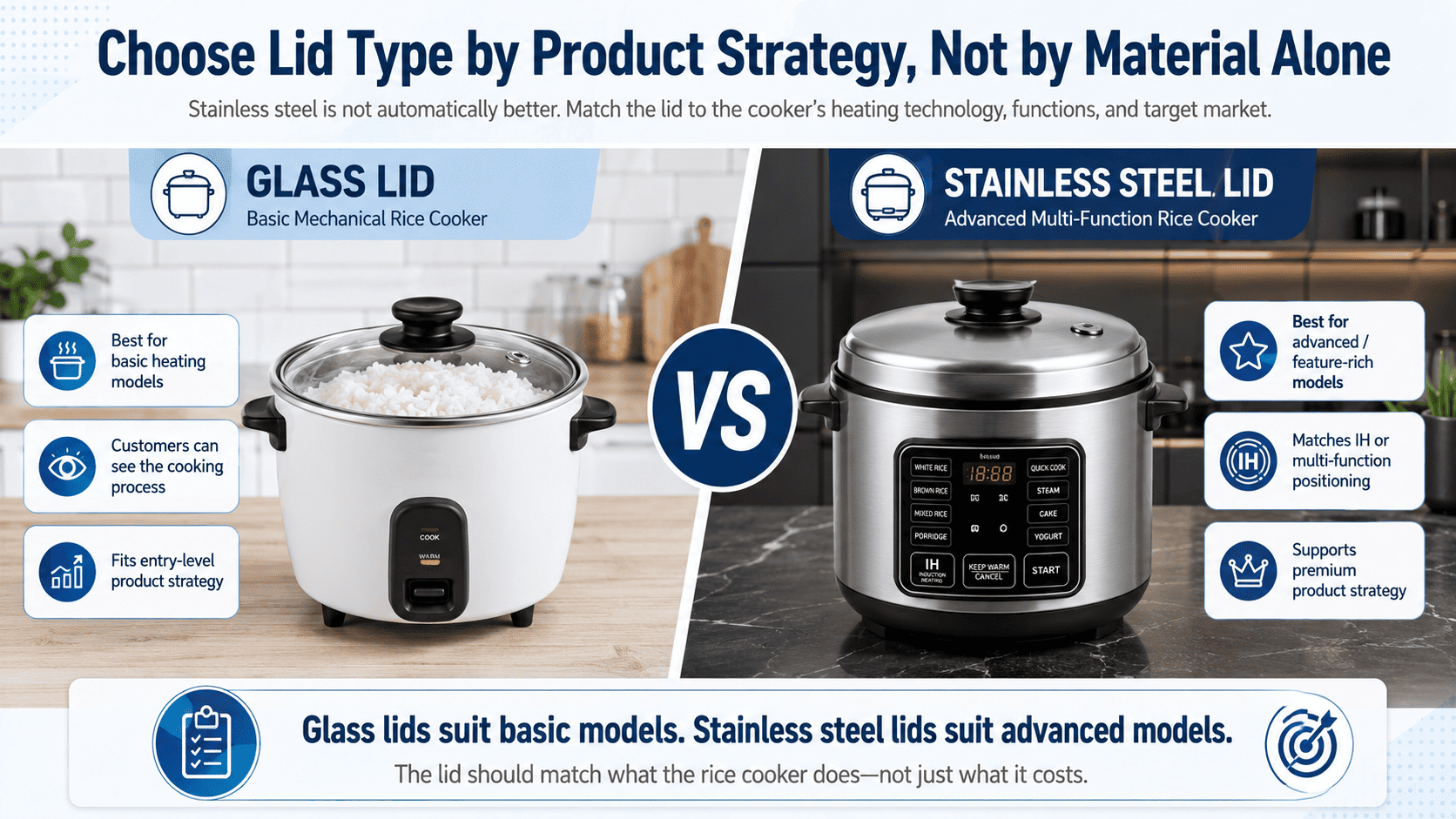
This assumption ignores how different lid types serve different product strategies. Stainless steel lids suit models with advanced heating systems like IH technology or multi-function controls. Glass lids suit basic heating models where customers value seeing the rice cook. The lid type should match what the rice cooker does, not just what it costs.
When Stainless Steel Lids Make Sense for Your Product Line
I work with customers who position rice cookers in the mid to premium range. These models usually have multiple cooking modes. They include features like slow cooking, soup making, or cake baking. Customers buying these models care more about versatility than watching rice cook.1
Stainless steel lids work here because they match customer expectations at this price point. If you price a rice cooker at $80 to $150 retail, customers expect materials that feel substantial. A stainless steel lid reinforces that perception. It also hides the interior when customers use non-rice functions. Nobody wants to see soup bubbling through a glass lid.
We also see stainless steel lids on commercial rice cookers. These are used in restaurants or catering. Visibility doesn't matter. Durability and heat retention matter more. A stainless steel lid can take more bumps in a busy kitchen. It doesn't crack if someone drops it.2
But here's what buyers miss. Stainless steel lids only work when the rest of the rice cooker matches this positioning. If your model has basic one-button operation and costs $30 retail, a stainless steel lid makes it look wrong. Customers wonder why they're paying extra for a "premium" lid on a basic product.
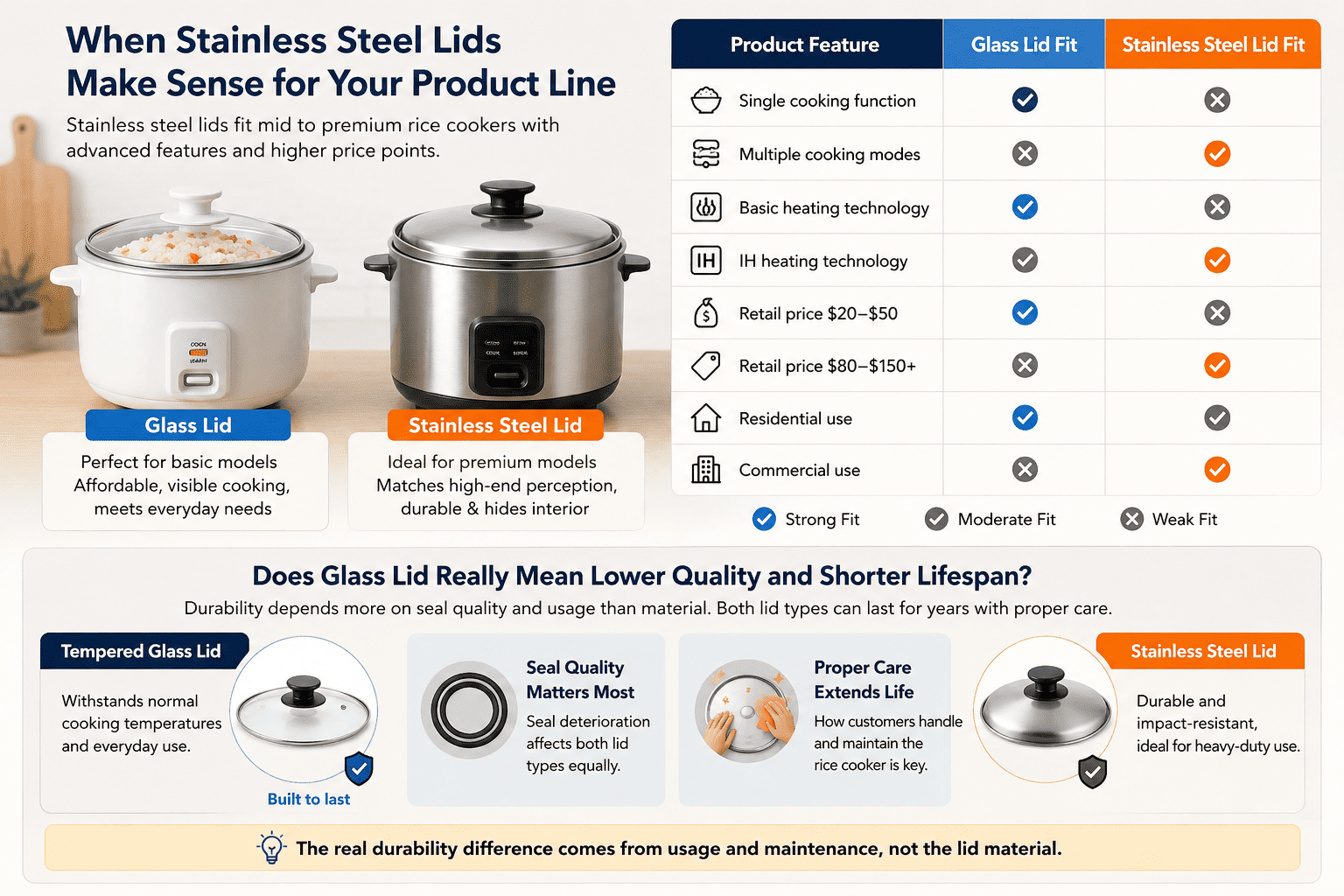
| Product Feature | Glass Lid Fit | Stainless Steel Lid Fit |
|---|---|---|
| Single cooking function | Strong | Weak |
| Multiple cooking modes | Weak | Strong |
| Basic heating technology | Strong | Weak |
| IH heating technology | Moderate | Strong |
| Retail price $20-$50 | Strong | Weak |
| Retail price $80-$150+ | Weak | Strong |
| Residential use | Strong | Moderate |
| Commercial use | Weak | Strong |
Does Glass Lid Really Mean Lower Quality and Shorter Lifespan?
Many buyers worry glass lids break easily. They think stainless steel lids last longer. They fear glass lids will increase warranty claims.
Glass lid durability depends more on seal quality and usage scenarios than the material itself. Tempered glass lids withstand normal cooking temperatures and last for years with proper care.3 Seal deterioration affects both lid types equally. The real durability difference comes from how customers handle and maintain the rice cooker, not which lid material you choose.
What Actually Determines Lid Lifespan in Real Use
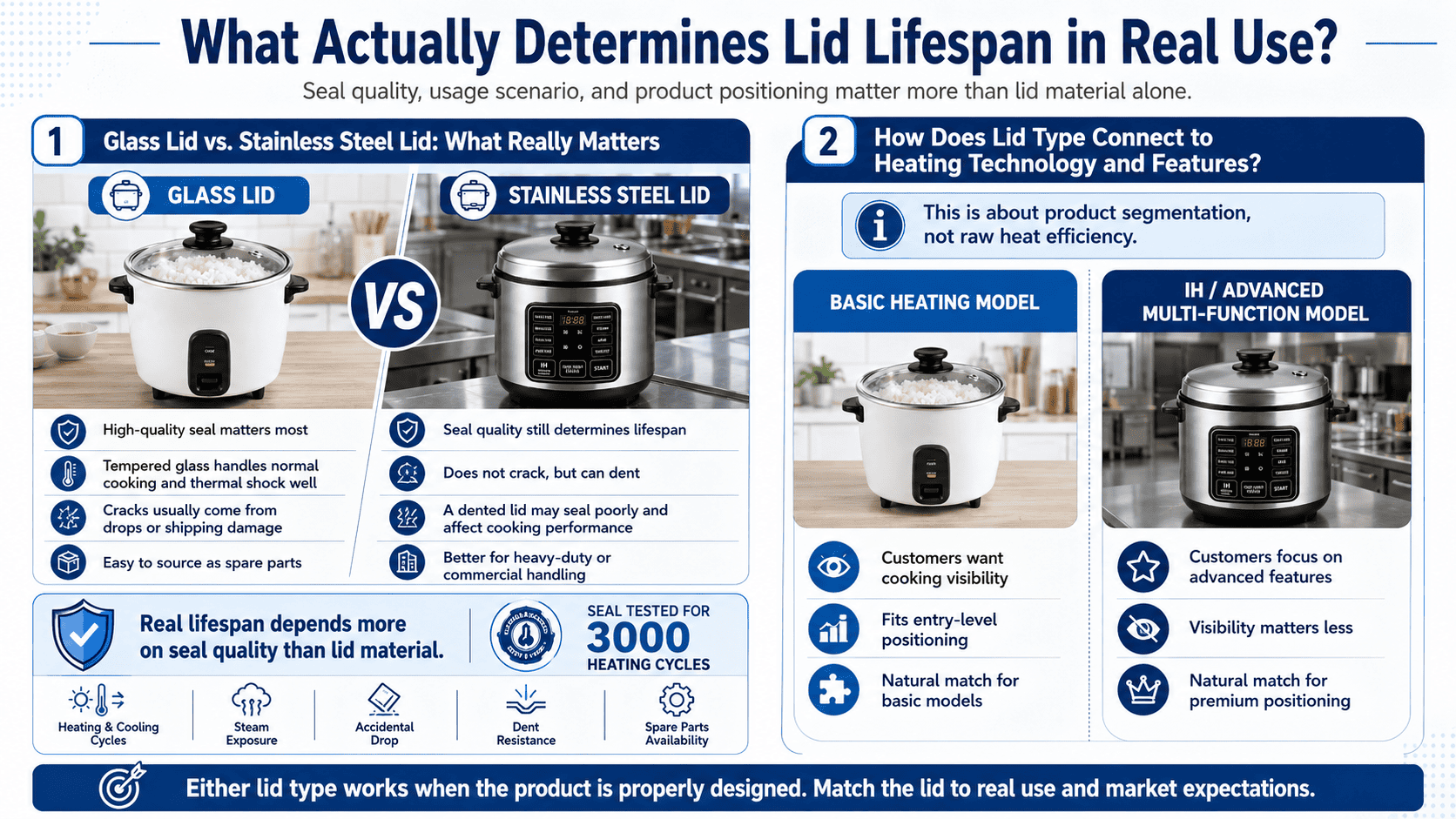
I've reviewed warranty data with several customers over the years. The pattern is clear. Lid material rarely causes failures. Seal degradation causes most lid-related issues. This happens with both glass and stainless steel lids.
Seals wear out from repeated heating and cooling cycles. Steam exposure breaks down the rubber or silicone over time.4 A glass lid with a high-quality seal outlasts a stainless steel lid with a cheap seal. We source seals from suppliers who test them for at least 3000 heating cycles.5 This matters more than whether the lid is glass or steel.
Glass lids do crack if dropped. But this happens less often than buyers expect. Tempered glass handles thermal shock well. It withstands sudden temperature changes during cooking. I've never seen a glass lid crack from normal cooking use. Cracks happen during shipping or from accidental drops after purchase.
Stainless steel lids don't crack. But they dent. A dented lid doesn't seal properly. This lets steam escape. It affects cooking performance.6 Fixing a dented stainless steel lid is harder than replacing a cracked glass lid. Glass lids are also easier to source as spare parts. This reduces after-sales headaches.
The usage scenario matters most. If you sell to markets where rice cookers sit on kitchen counters and get careful handling, glass lids work fine. If you sell commercial models that get moved around frequently, stainless steel lids make more sense. Match the lid type to how your customers actually use the product.
How Does Lid Type Connect to Your Heating Technology and Features?
Buyers sometimes ask if glass lids limit heating efficiency. They wonder if stainless steel lids retain heat better. They think material choice affects cooking performance.
Lid type connects to heating technology through product segmentation, not material performance. Basic heating models pair naturally with glass lids because customers at this price point want visibility. IH heating models often use stainless steel lids because customers buying advanced technology care less about seeing inside. The heating system works effectively with either lid type when properly designed.
Matching Lid Selection to Your Product's Feature Set
I help customers think through their entire product line. We look at what features each model includes. Then we decide which lid type makes sense. This is about creating a coherent product story, not comparing materials.
Basic models with simple heating elements work well with glass lids. These cookers usually have one or two cooking modes. Customers want to check on their rice without opening the lid. Seeing the rice bubble tells them cooking is happening. This builds confidence in the product.7 Glass lids serve this psychological need.
Feature-rich models with IH heating or fuzzy logic controls8 work better with stainless steel lids. These models cost more. They include multiple cooking programs. Customers trust the technology to cook properly without watching. They care more about the end result than the cooking process. A stainless steel lid matches the sophisticated impression these features create.
We also see different preferences by market. Some Asian markets strongly prefer glass lids even on premium models. Customers want to see the rice cooking regardless of price. Other markets associate glass lids with cheaper products and won't pay premium prices for them. You need to understand your target market's expectations.
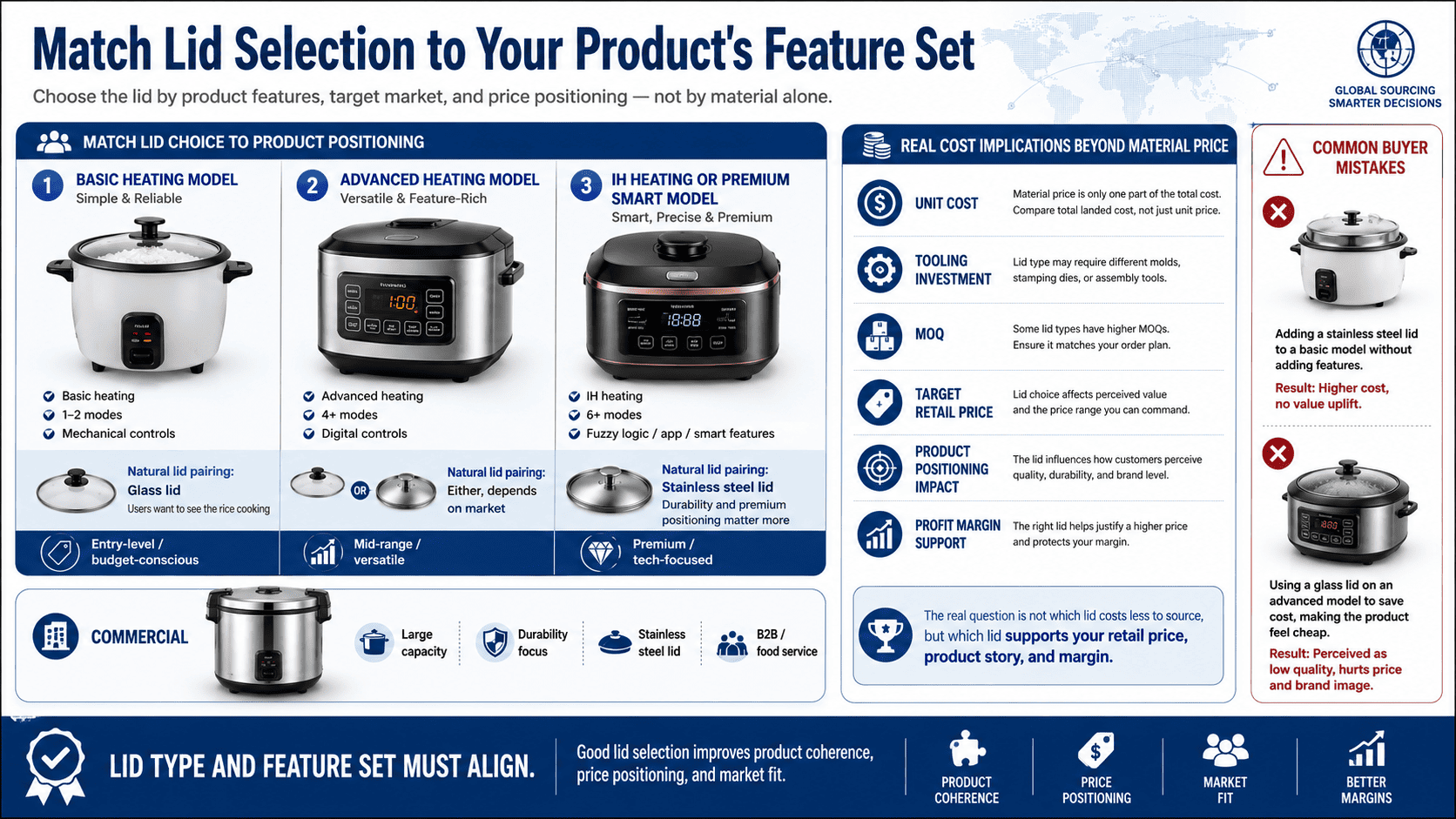
Here's where buyers make mistakes. They add a stainless steel lid to a basic model hoping to charge more. But they don't add features to justify the higher price. Or they use glass lids on advanced models to save costs. But the lid choice makes the product look cheap compared to its features. The lid type and feature set must align.
| Heating Technology | Typical Features | Natural Lid Pairing | Market Positioning |
|---|---|---|---|
| Basic heating | 1-2 cooking modes, mechanical controls | Glass lid | Entry-level, budget-conscious |
| Advanced heating | 4+ cooking modes, digital controls | Either, depends on market | Mid-range, versatile |
| IH heating | 6+ modes, fuzzy logic, smartphone app | Stainless steel lid | Premium, tech-focused |
| Commercial | Large capacity, durability focus | Stainless steel lid | B2B, food service |
What Are the Real Cost Implications Beyond Material Price?
Buyers focus on unit cost differences between glass and stainless steel lids. They compare material prices. They look for the cheaper option. But material cost is only part of the decision.
The cost structure includes tooling, minimum order quantities, and market positioning impact. Glass lids usually have lower unit costs but similar tooling investments. Stainless steel lids cost more per unit but let you position products at higher price points. The real cost question is whether the lid choice supports your target retail price and profit margin, not which material costs less to source.
Understanding Total Cost of Lid Selection Decisions
I discuss costs with procurement managers regularly. We break down what affects their total investment. Material unit cost is obvious. But several hidden factors matter more to profitability.
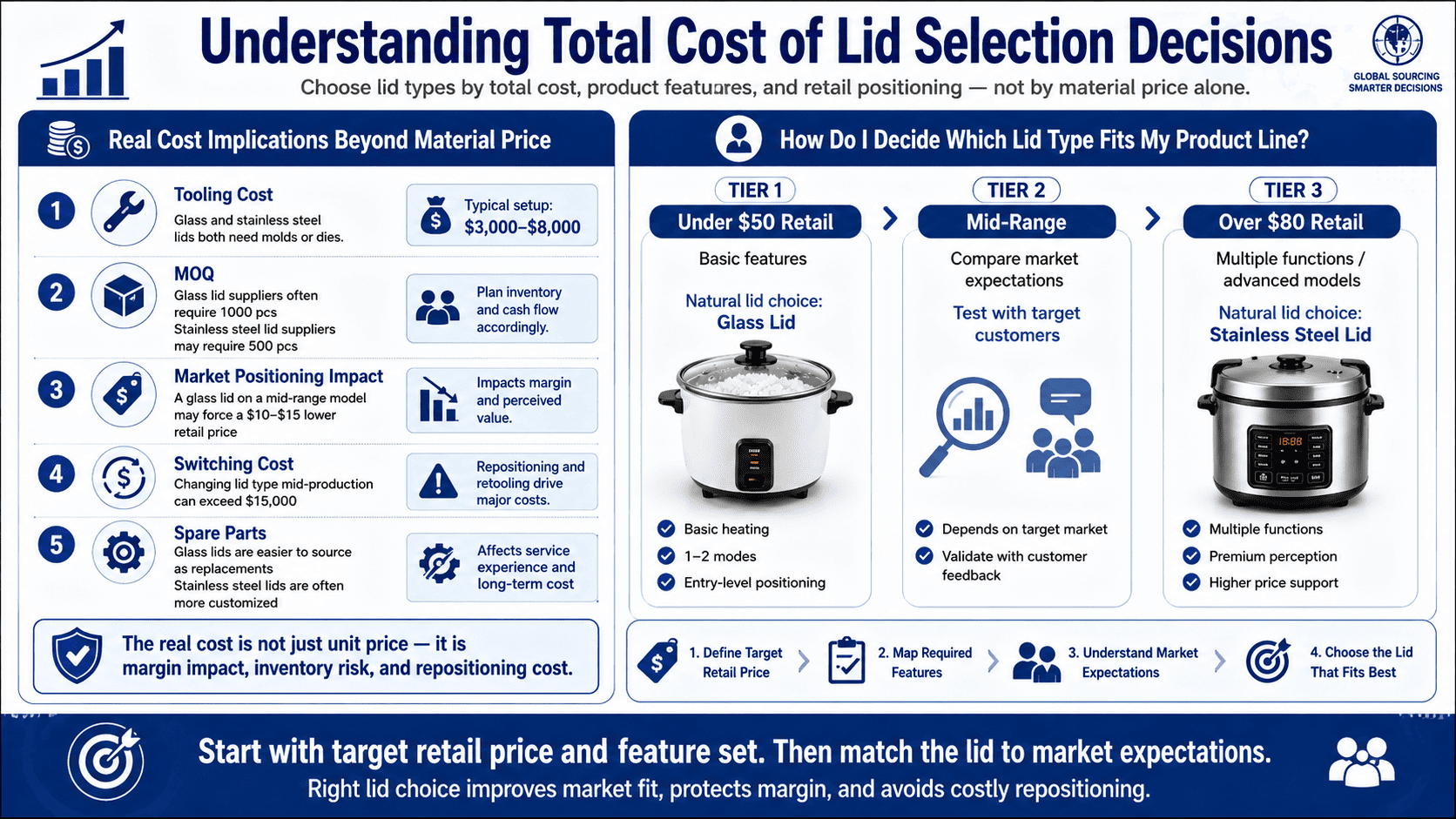
Tooling costs for glass lids and stainless steel lids are comparable. Both require molds or dies. Initial setup runs between $3000 and $8000 depending on lid size and complexity.9 This cost spreads across your order volume. It matters less on large orders but significantly impacts small test orders.
Minimum order quantities work differently. Glass lid suppliers often require 1000-piece minimums. Stainless steel lid suppliers may require 500-piece minimums10 because the material is easier to work with. But this varies by supplier. If you're testing a new model, MOQ affects your inventory risk.
The bigger cost impact comes from market positioning. If you choose glass lids for a mid-range model, you might need to price it $10-15 lower retail than with stainless steel lids. Multiply that across your sales volume. The "savings" from cheaper glass lids disappear quickly if you lose $10 retail margin on every unit sold.
I've also seen costs from repositioning. One customer launched with glass lids. Sales were weak. They switched to stainless steel lids mid-production. This required new tooling, repackaging, and marketing material updates. The switching cost exceeded $15000. Getting the lid choice right the first time avoids this waste.
Spare parts availability affects long-term costs too. Glass lids are more standardized. Sourcing replacement lids is easier if customers need them. Stainless steel lids often use custom designs. This complicates after-sales support. Plan for this when you choose lid types.
How Do I Actually Decide Which Lid Type Fits My Product Line?
Buyers want a clear decision framework. They need to choose lid types for multiple models. They want to avoid the positioning mistakes I described earlier.
Start with your target retail price and feature set for each model. List out the cooking modes and technology level. Then match lid type to market expectations at that price point. If your model retails under $50 with basic features, use glass lids. If it retails over $80 with multiple functions, use stainless steel lids. If you're between these ranges, test with your target customers to see which lid type they expect.
A Step-by-Step Approach for Lid Type Selection
I walk customers through this process regularly. We make it systematic so they choose confidently. Let me share the steps that work.
First, define each model's position in your product line. List them from most basic to most advanced. Note the target retail price for each. This creates a pricing ladder. Your lid choices should support this ladder visually and functionally.
Second, map features to price points. Your entry model might have one cooking mode at $25-35 retail. Your mid-range model might have four modes at $60-80 retail. Your premium model might have eight modes plus IH heating at $120-150 retail. Write these down clearly.
Third, assign lid types that match each tier's expectations. Entry models get glass lids. This keeps costs aligned with price. It lets customers see their rice cooking. Mid-range models need careful consideration. Ask whether your target customers value visibility or perceived durability more. Premium models usually get stainless steel lids to match their advanced features.
Fourth, check your assignments against competitive products in your target market. Look at what sells successfully at each price point. If all successful $70 rice cookers in your market use glass lids, using stainless steel might make you look overpriced. If they use stainless steel, glass might make you look cheap. Match market norms unless you have a specific differentiation strategy.
Fifth, calculate whether your margin supports the lid choice. If you want $20 profit margin at $50 retail, can you absorb a stainless steel lid that costs $3 more than glass? Run the numbers. Make sure lid choice doesn't squeeze your profitability too much.
Finally, test with actual customers when possible. Show them mock-ups or samples with both lid types. Ask which they'd expect at your target price. Their reactions tell you if your positioning works. I've seen buyers discover their assumptions were wrong once they tested with real customers.
Here's a decision checklist I use with customers:
- [ ] Is my retail price under $50? → Consider glass lid
- [ ] Does my model have 4+ cooking functions? → Consider stainless steel lid
- [ ] Do my target customers value seeing the cooking process? → Consider glass lid
- [ ] Am I targeting commercial or food service buyers? → Consider stainless steel lid
- [ ] Do successful competitors at my price point use glass or steel lids? → Match their pattern
- [ ] Does my profit margin support the higher cost of stainless steel lids? → Calculate carefully
- [ ] Have I tested customer reactions to both lid options? → Test before committing to large orders
Conclusion
The lid type you choose defines how customers perceive your rice cooker's value and position in the market. Match glass lids to basic, affordable models where customers want visibility. Match stainless steel lids to feature-rich models where perceived quality matters more than seeing inside. Get this alignment right, and your products will sell at the prices you target.
"Investigation of home appliances industry and devices ... - PMC", https://pmc.ncbi.nlm.nih.gov/articles/PMC11300863/. Consumer research on kitchen appliance purchases indicates that buyers segment by price tier, with budget-conscious consumers prioritizing basic functionality and transparency, while premium segment buyers emphasize advanced features, brand reputation, and perceived quality over operational visibility. Evidence role: expert_consensus; source type: research. Supports: consumer decision-making patterns for kitchen appliances across price tiers. Scope note: This describes general appliance consumer behavior rather than specific research on rice cooker lid preferences ↩
"New Glass Tops Steel in Strength and Toughness - Berkeley Lab", https://newscenter.lbl.gov/2011/01/10/new-glass-tops-steel/. Stainless steel exhibits ductile behavior under impact, absorbing energy through plastic deformation rather than fracture, while tempered glass, despite high strength under compression and thermal stress, remains brittle and susceptible to catastrophic failure from point impacts or edge strikes. Evidence role: mechanism; source type: research. Supports: the comparative impact resistance properties of stainless steel versus tempered glass. ↩
"Borosilicate glass - Wikipedia", https://en.wikipedia.org/wiki/Borosilicate_glass. Tempered glass undergoes a heat treatment process that increases its strength and thermal shock resistance, allowing it to withstand rapid temperature changes typical in cooking applications without fracturing under normal use conditions. Evidence role: mechanism; source type: research. Supports: the thermal shock resistance and durability characteristics of tempered glass in cooking applications. Scope note: This describes general tempered glass properties rather than specific rice cooker lid performance data ↩
"Analysis of O-Ring Seal Failure under Static Conditions and ... - PMC", https://pmc.ncbi.nlm.nih.gov/articles/PMC6723462/. Elastomeric sealing materials experience degradation through thermal cycling and moisture exposure, as repeated heating causes polymer chain scission and plasticizer migration, while steam accelerates hydrolytic degradation of certain polymer types. Evidence role: mechanism; source type: research. Supports: the degradation mechanisms of elastomeric seals under thermal cycling and steam exposure. ↩
"[PDF] Appliance Standards Program and Test Procedures", https://www.energy.gov/sites/default/files/2023-07/sbrefa-general-compliance-guide.pdf. Industry testing protocols for small kitchen appliances typically specify thousands of operational cycles to simulate multi-year product lifespans, with cycle counts varying based on expected usage frequency and product category. Evidence role: general_support; source type: institution. Supports: typical durability testing requirements for small kitchen appliance seals. Scope note: This describes general appliance testing approaches rather than a specific 3000-cycle standard for rice cooker seals ↩
"Analysis of Failure Causes of Mechanical Seals from Failure Modes", https://www.vacculex.com/knowledge/failure-causes-of-mechanical-seals/. Effective sealing requires consistent contact pressure between gasket and sealing surfaces, with surface deformation disrupting this contact geometry and creating leak paths, as even minor deviations from flatness can compromise seal integrity in pressure-containing applications. Evidence role: mechanism; source type: research. Supports: the relationship between sealing surface deformation and seal effectiveness. ↩
"Psychology of Consumer Behavior: Understanding Your Market", https://www.keiseruniversity.edu/articles/consumer-behavior-understanding-market/. User experience research indicates that visible operational feedback can increase consumer confidence in product performance, particularly for unfamiliar or automated processes, as transparency reduces uncertainty and allows users to verify that the device is functioning as expected. Evidence role: expert_consensus; source type: research. Supports: the role of visual feedback in building user confidence with appliances. Scope note: This describes general UX principles rather than specific research on rice cooker visibility preferences ↩
"Fuzzy control system - Wikipedia", https://en.wikipedia.org/wiki/Fuzzy_control_system. Fuzzy logic is a computational approach that handles approximate reasoning rather than binary true/false logic, enabling appliances to make nuanced control decisions based on multiple input variables, such as adjusting cooking parameters based on rice type, quantity, and ambient conditions. Evidence role: definition; source type: encyclopedia. Supports: the definition of fuzzy logic control systems and their application in consumer appliances. ↩
"[PDF] Does product design really determine 80% of manufacturing cost?", https://dspace.mit.edu/bitstreams/d12b51db-f707-4022-8fc5-c4d87028a0c0/download. Tooling costs for small appliance components vary widely based on part complexity, material, production volume, and manufacturing process, with simple injection molds and stamping dies for consumer products typically ranging from several thousand to tens of thousands of dollars. Evidence role: general_support; source type: other. Supports: typical tooling cost ranges for small appliance component manufacturing. Scope note: This describes general manufacturing tooling costs rather than specific data for rice cooker lids ↩
"contract manufacturing agreement - SEC.gov", https://www.sec.gov/Archives/edgar/data/1872789/000119312522097622/d297684dex105.htm. Minimum order quantities in component manufacturing depend on setup costs, material handling, and production efficiency, with suppliers typically setting MOQs that amortize fixed costs across sufficient unit volume, though specific quantities vary by manufacturer, material, and process complexity. Evidence role: general_support; source type: other. Supports: typical minimum order quantity patterns in component manufacturing. Scope note: This describes general MOQ principles rather than specific quantities for rice cooker lid suppliers ↩